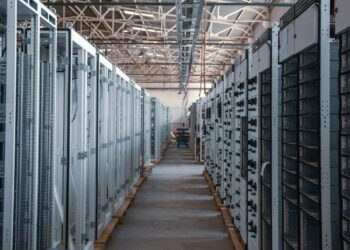
The landscape of modern business is inextricably linked to the reliability and performance of its underlying Information Technology (IT) infrastructure. For many organizations, maintaining a dedicated, in-house data center presents a significant drain on capital expenditure (CAPEX) and operational expenditure (OPEX), diverting resources from core competencies. This is where colocation services emerge as a powerful, strategic solution, allowing companies to own and manage their servers and network hardware while housing them in a professional, secure, and highly-redundant third-party data center facility.
Colocation is a sophisticated outsourcing model. It essentially involves renting physical space—be it a single rack unit (RU), a full cabinet, a dedicated cage, or even a private suite—within a specialized data center. The business retains complete control over the hardware, operating systems, and applications, while the colocation provider manages the mission-critical environment: power, cooling, physical security, and high-speed network access. This guide will delve into the essential features, transformative benefits, and key considerations for businesses looking to harness the power of colocation.
Understanding the Colocation Model: A Foundational Overview
Colocation, sometimes simply referred to as ‘colo,’ bridges the gap between a completely in-house data center and a fully outsourced cloud service. It is a unique hybrid approach built on a shared-resource framework for the facility itself.
Key Components of a Colocation Arrangement
The fundamental agreement between a business and a colocation provider revolves around three primary elements:
A. Physical Space Rental: This is the allocation of physical room for the client’s equipment. This space is typically measured in Rack Units (RU), full Cabinets (Racks), Cages, or Private Suites, scaled to meet the specific density and volume requirements of the client’s hardware.
B. Provision of Essential Utilities: The data center provides the necessary non-IT infrastructure for the hardware to function optimally. This includes continuous, redundant Power (with uninterruptible power supplies (UPS) and backup generators), and advanced Cooling Systems to manage the significant heat generated by server equipment.
C. Network and Connectivity: The facility ensures reliable, high-speed Internet Connectivity through diverse network carriers, often referred to as carrier neutrality. This allows clients to select the provider that best fits their network performance and cost requirements.
D. Physical Security and Monitoring: The provider is responsible for the facility’s robust security posture, protecting the client’s valuable physical assets from theft, damage, and unauthorized access through multi-layered security protocols.
By separating the management of the physical environment (facility operations) from the management of the IT equipment (hardware, software, applications), colocation allows businesses to achieve a level of operational efficiency and infrastructure quality that would be prohibitively expensive to build and maintain on their own.
Eight Transformative Benefits of Colocation Services
The decision to migrate to a colocation facility is often driven by a desire for enhanced performance, reliability, and cost optimization. The following benefits represent the core value proposition of colocation:
1. Cost Efficiency and Financial Predictability
One of the most compelling arguments for colocation is its positive impact on the company’s financial structure.
A. Reduced Capital Expenditure (CAPEX): Colocation eliminates the need for massive upfront investment in building, outfitting, and maintaining a dedicated, enterprise-grade data center. This includes costs for land acquisition, specialized construction, backup generators, advanced cooling equipment, and fire suppression systems.
B. Lower Operational Expenditure (OPEX): The continuous operating expenses associated with a data center—such as high-voltage electricity bills, facility maintenance, and specialized IT facility staffing—are shared among all tenants, significantly reducing the burden on any single organization.
C. Predictable Monthly Costs: Colocation agreements are typically structured with predictable monthly or annual fees, allowing IT budgets to shift from volatile, variable expenses to manageable, fixed operational costs. This predictability is vital for financial planning.
2. Unparalleled Reliability and Uptime
Colocation providers invest heavily in infrastructure redundancy, aiming for the highest possible uptime (often 99.999% or higher) guaranteed by a Service Level Agreement (SLA).
A. Power Redundancy: Facilities incorporate redundant power grids, large UPS batteries for instantaneous failover, and massive diesel or natural gas generators capable of running the entire facility for extended periods during grid outages. This eliminates power-related downtime.
B. Environmental Control: Sophisticated Heating, Ventilation, and Air Conditioning (HVAC) systems and cooling methodologies (e.g., in-row cooling, hot/cold aisle containment) maintain precise temperature and humidity, preventing hardware failures due to overheating.
C. Network Diversity: Access to multiple, redundant Internet Service Providers (ISPs) and network routes ensures that a single carrier failure will not isolate the client’s systems.
3. Enhanced Security Posture
Physical security is paramount in a colocation facility, offering protection levels often beyond the reach of a standard corporate office or server closet.
A. Multi-Layered Physical Security: Protection includes 24/7/365 on-site security personnel, secure perimeter fencing, vehicle barriers, and strictly controlled entry points like Mantraps (a two-door security vestibule).
B. Advanced Access Control: Access is managed through biometric scanners (e.g., fingerprint, retina scans), key cards, and multi-factor authentication, ensuring that only authorized personnel can reach the equipment floor.
C. Video Surveillance: Extensive camera systems monitor all critical areas, with recordings typically archived for many months, providing a clear audit trail.
4. Scalability and Flexibility
Business growth and fluctuating demand necessitate an IT infrastructure that can scale rapidly—a key feature of colocation.
A. Elastic Capacity: As a business expands its IT footprint, the colocation provider can quickly allocate additional rack space, power, or cooling capacity without requiring a major renovation or construction project. This agility allows organizations to scale up or down based on market needs.
B. On-Demand Resources: Clients can start with a quarter-rack and seamlessly move to a full cabinet or a private cage, ensuring their infrastructure investment perfectly matches their current requirements.
5. Network Performance and Low Latency
Colocation facilities are built as connectivity hubs, providing superior network performance.
A. Carrier Neutrality: This feature is critical, allowing tenants to connect to a broad ecosystem of carriers, cloud providers, and other businesses. This competition keeps network costs low and quality high.
B. Internet Exchange Access (IXP): Many facilities offer direct peering connections to IXPs, reducing hops and latency for traffic exchange with major content providers and other networks.
C. Cloud On-Ramps: Providers often offer dedicated, low-latency private connections (cloud on-ramps) to major Public Cloud services like AWS, Microsoft Azure, and Google Cloud, facilitating a seamless and secure Hybrid Cloud strategy.
6. Focus on Core Business Functions
By outsourcing the non-IT facility management (power, cooling, security) to a specialist, a company’s internal IT staff is freed from “plumbing” tasks and can concentrate on strategic initiatives that drive business value.
A. Resource Reallocation: IT staff can focus on application development, data analysis, security policy, and digital transformation, rather than generator testing and HVAC maintenance.
7. Meeting Compliance and Regulatory Standards
Colocation centers are designed to meet stringent industry and governmental compliance requirements.
A. Certifications and Audits: Reputable providers maintain certifications like SOC 1, SOC 2, ISO 27001, and often cater to specific regulatory frameworks like HIPAA (healthcare) or PCI DSS (financial/cardholder data). This simplifies the compliance process for the client.
B. Audit Trails: The rigorous access and monitoring procedures provide comprehensive logs necessary for regulatory audits.
8. Access to Expert Technical Support
Colocation agreements often include or offer specialized technical assistance within the data center.
A. Remote Hands and Smart Hands: These services allow the colocation provider’s trained, on-site technicians to perform basic troubleshooting, equipment reboots, physical cable management, and hardware replacement on behalf of the client, eliminating the need for the client’s staff to travel to the facility for routine tasks.
Colocation Deployment Models: Choosing the Right Space
Colocation is not a one-size-fits-all solution. Providers offer several options to suit diverse security, density, and volume requirements.
A. Rack/Cabinet Colocation
This is the most common model, where a client rents one or more full 42U or 48U server racks. The client’s equipment is secured within the dedicated, lockable cabinet, but the cabinet itself is located on a shared floor alongside other tenants’ cabinets. This is ideal for small to medium-sized businesses or those with moderate IT requirements.
B. Caged Colocation
This provides a greater degree of physical security and privacy. A Colocation Cage is an area fenced off with metal mesh within the main data center floor. The cage offers a dedicated, fully enclosed, and lockable space, often housing multiple racks. This is suitable for enterprises with stricter compliance mandates or a large volume of equipment that requires greater dedicated working space.
C. Private Suite Colocation
The highest level of security and privacy, a Private Suite is a completely separate, dedicated room or section of the data center. It has its own reinforced walls, ceiling, and floor, often with independent biometric access control. This option is typically chosen by very large enterprises or government entities requiring maximum security, dedicated environmental controls, or a significant amount of specialized infrastructure.
D. Wholesale Colocation
In this model, the client leases a large, contiguous, customized space within the facility, often an entire floor or building. The client essentially manages the entire infrastructure (racks, sometimes cooling or power distribution) within that leased area, while the provider is responsible for the building, utility feeds, and perimeter security. This is exclusively for hyperscale entities and technology giants.

Technical Deep Dive: Colocation Features Explained
To truly appreciate the value of a colocation service, it is necessary to understand the specialized technology and infrastructure they employ.
1. Power Infrastructure Redundancy
Power is the lifeblood of a data center, and redundancy is built in at every level:
A. Utility Feeds: Data centers often draw power from multiple, diverse substations or power grids. B. Uninterruptible Power Supplies (UPS): Large battery arrays provide immediate power conditioning and a seamless bridge between a utility failure and the startup of backup generators. C. Backup Generators: Industrial-grade diesel or natural gas generators are maintained with sufficient fuel reserves and are regularly tested to ensure they can power the facility indefinitely. The most robust facilities use an N+1 or 2N redundancy model, meaning they have at least one (N+1) or a completely mirrored (2N) set of components ready for immediate failover.
2. Advanced Cooling Systems
Servers generate substantial heat, which must be efficiently removed to prevent thermal throttling and hardware damage.
A. Hot/Cold Aisle Containment: This standard practice separates the flow of cold air (drawn in by servers) from the hot air (exhausted by servers), increasing cooling efficiency. B. Computer Room Air Conditioning (CRAC) / Computer Room Air Handler (CRAH) Units: These systems work to maintain the optimal temperature and humidity. C. Water/Air Cooling: Colocation facilities increasingly offer advanced liquid cooling solutions to support high-density racks (e.g., those housing AI and Machine Learning hardware) that traditional air cooling cannot handle.
3. Fire Suppression
Traditional water-based sprinklers are hazardous to electrical equipment. Data centers utilize specialized non-water-based systems.
A. Detection: Early detection systems, such as VESDA (Very Early Smoke Detection Apparatus), can detect even minute smoke particles. B. Suppression Agents: Common suppression systems use inert gases (e.g., Nitrogen, Argon, or clean-agent chemicals like FM-200 or Novec 1230), which safely displace oxygen or remove heat to suppress a fire without damaging the electronic equipment.
4. Remote and Smart Hands Services
These managed services are a force multiplier for remote clients:
A. Remote Hands: Basic, scheduled tasks like pressing a power button, swapping a tape backup, or visually checking indicator lights. B. Smart Hands: More technical, skilled work, such as troubleshooting network issues, diagnosing physical port failures, installing or replacing drives, or complex cabling. This is crucial for businesses without a local technical presence.

Navigating the Decision: Key Colocation Evaluation Criteria
Selecting the right colocation partner is a long-term strategic decision. Careful due diligence is essential, focusing on the following critical areas:
A. Location and Geographic Risk: Proximity to your headquarters (for in-person access) must be balanced against geographic diversity (for disaster recovery). Assess the location’s vulnerability to natural disasters (floods, earthquakes, hurricanes).
B. Uptime Guarantee (SLA): Scrutinize the Service Level Agreement. What is the guaranteed uptime (e.g., 99.999%)? What are the penalties for failure to meet the SLA? A robust SLA is a sign of confidence in the facility’s infrastructure.
C. Power Density and Cost: Ensure the provider can accommodate the power requirements of your equipment. High-density servers (common with virtualization or high-performance computing) require more power per rack, which must be supported by the cooling system. Compare the power pricing models (e.g., fixed rate versus metered usage).
D. Carrier Ecosystem: A carrier-neutral facility with a diverse and competitive range of network providers is non-negotiable for future flexibility and cost management. Investigate the providers available and the cost of cross-connects (the physical cable linking your equipment to a carrier’s network point).
E. Security and Compliance: Demand a detailed tour of the security measures and request copies of recent compliance audit reports (e.g., SOC 2 Type II).
F. Long-Term Scalability: Will the facility have the space, power, and connectivity to support your projected growth over the next five to ten years? A provider that is near capacity may limit your future expansion options.
Colocation vs. Cloud Computing: A Hybrid Perspective
While cloud computing (IaaS, PaaS) has gained significant traction, colocation remains a superior choice for specific use cases.
When Colocation is the Superior Choice:
A. Maximum Control: For applications requiring absolute control over the hardware stack (e.g., customized OS, specialized hardware accelerators, legacy systems). B. Fixed Costs: When capital investment has already been made in equipment and the goal is to reduce variable utility/facility costs. C. Predictable Workloads: For mission-critical, stable, and high-performance workloads (e.g., mainframes, large database servers) where the performance profile must be consistent and dedicated. D. High Data Transfer: For businesses with massive, frequent data transfer needs, colocation often offers more cost-effective bandwidth pricing than cloud services. E. Specific Compliance: Certain industry regulations mandate control over the physical location and management of the hardware, which colocation provides.
The most powerful strategy today is often Hybrid IT, utilizing colocation for core, dedicated workloads (like database backends) and leveraging public cloud for flexible, burstable, and development workloads. The modern colocation facility serves as the secure, high-speed ‘bridge’ between these two environments.
Conclusion: The Strategic Imperative of Colocation
Colocation services represent a mature, reliable, and strategically important component of the modern enterprise IT strategy. By offloading the complexities and exorbitant costs of data center facility management, businesses gain access to enterprise-grade power, cooling, security, and connectivity, all while retaining full control over their most valuable IT assets.
In an era where system uptime and data security are directly linked to market reputation and revenue, choosing a robust colocation partner is a non-negotiable step toward maximizing operational efficiency and ensuring business continuity. The financial benefits, the guarantee of high availability, and the enhanced security environment collectively make colocation the ultimate infrastructure decision for organizations striving for a competitive edge and resilient IT operations.